
Down Syndrome Dating: Dignity, Autonomy, and Love
Every person with Down syndrome has the right to romantic relationships, companionship, and love. This is not an aspiration - it is a fundamental human right affirmed by the United Nations Convention on the Rights of Persons with Disabilities. MyDatingLove exists to make that right accessible, safe, and joyful.
Page Summary
What You'll Find on This Page
- Why adults with Down syndrome have the same right to love and relationships as anyone else - backed by law and ethics
- How guided matching and paced communication create a safe, empowering dating experience
- Practical guidance for parents, guardians, and support networks who want to help - not hover
- FAQ answering the most common questions about Down syndrome and dating
The Right to Love: Relationships and Down Syndrome in 2026
Adults with Down syndrome desire - and thrive in - romantic relationships. According to the National Down Syndrome Society (NDSS), people with Down syndrome experience the full range of human emotions, including love, attraction, and the need for companionship. A 2023 study published in the Journal of Intellectual Disability Research found that adults with Down syndrome who are in supportive relationships report significantly higher levels of life satisfaction and emotional well-being.
Here's where it gets interesting: the biggest barrier to dating for adults with Down syndrome is not capability - it is opportunity. Social isolation, overprotective environments, and a persistent cultural myth that people with intellectual disabilities "don't need" or "can't handle" relationships create artificial walls around a fundamental human experience. The UN Convention on the Rights of Persons with Disabilities (Article 23) explicitly affirms the right of all disabled people to marry and found a family on an equal basis with others.
What does this mean in practice? It means creating spaces where adults with Down syndrome can meet, connect, and date with appropriate support - not surveillance. Services like Find Love Safely have pioneered the concept of guided matching for adults with intellectual and developmental disabilities, combining personalized partner introductions with safety workshops and community events. MyDatingLove builds on this model with digital-first tools that respect autonomy while offering layered safety features.
"I want the same thing everyone wants - someone who texts me good morning and wants to watch movies on Friday night. That is not a complicated wish." - Sarah, 31, Down syndrome community member
The bottom line: Down syndrome dating is not a special case. It is dating - with specific supports that make the process accessible. Adults with Down syndrome are capable of consent, capable of love, and capable of building lasting partnerships when given the opportunity and respect they deserve. For more perspectives on inclusive dating, explore our inclusive dating advice guide.
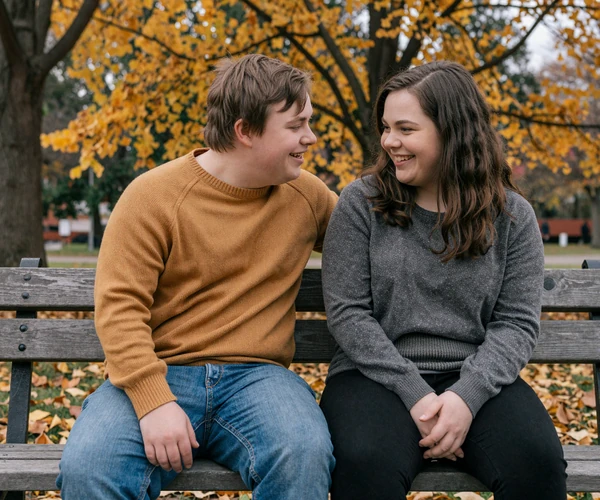
Down Syndrome and Relationships: The Numbers
Supported Matching: Safe Steps Toward Connection
Down syndrome dating works best with layered support - not gatekeeping. Our approach balances independence with safety at every step.
Guided Profile Creation
Create your profile at your own pace with step-by-step prompts. Each section uses clear, simple language and visual cues. A trusted support person can help if you choose - but the profile is yours. You decide what to share, including your photo, interests, and what you are looking for in a partner.
How it worksOptional Support Person Access
Invite a parent, sibling, or support worker to view your activity - if you want. This feature is entirely optional and can be turned on or off at any time. Support persons can see matches and messages but cannot send messages on your behalf. Your autonomy stays intact while adding a safety layer.
Safety detailsPaced Communication Tools
Start with text messages and pre-written conversation prompts before moving to voice or video calls. No pressure to respond immediately - take the time you need. Built-in "icebreaker" questions help start conversations naturally without the anxiety of a blank screen.
Communication tipsWhat Makes Down Syndrome Dating Different on MyDatingLove?
Mainstream dating apps are designed for speed - swipe, match, chat, meet. That pace does not serve everyone, and it especially does not serve adults with Down syndrome who benefit from structure, predictability, and clear communication. Our platform is intentionally slower and more guided, drawing from proven models like Find Love Safely's personalized matching approach.
Consider this: the average Tinder user spends 1.5 seconds deciding whether to swipe right or left (Stanford Research, 2022). That format reduces people to a photo and a tagline. For adults with Down syndrome - whose strengths often emerge through conversation, shared activities, and time - this model is fundamentally inadequate.
| Feature | Mainstream Apps | MyDatingLove |
|---|---|---|
| Profile creation | Complex, text-heavy | Step-by-step with visual prompts |
| Matching speed | Instant swipe mechanics | Paced, guided introductions |
| Support person access | Not available | Optional, user-controlled |
| Communication tools | Unstructured chat | Icebreaker prompts + paced messaging |
| Safety verification | Basic or none | Multi-step verification + moderation |
| Cognitive accessibility | Not prioritized | WCAG 2.1 AA, simple language |
The real question is: should dating platforms adapt to their users, or should users adapt to the platform? We believe the answer is obvious. Adults with Down syndrome deserve tools built for how they communicate, connect, and build trust - not stripped-down versions of apps designed for a neurotypical audience.
A Guide for Parents, Guardians, and Support Networks
Supporting an adult with Down syndrome in dating means walking a careful line between protection and empowerment. The instinct to shield your loved one from rejection, heartbreak, or exploitation is natural - but overprotection can be its own form of harm, denying the opportunity to grow, learn, and experience the full richness of adult life.
Practical Steps for Supportive Involvement
- Start with conversation, not rules. Ask what they want from a relationship. Listen without correcting. Their answers may surprise you - and they deserve to be heard.
- Teach safety through practice, not restriction. Role-play scenarios: what to do if someone asks for money, how to recognize uncomfortable situations, when to call a trusted person. Our safety and privacy page provides detailed guidelines.
- Use the optional support person feature wisely. This tool lets you see activity without controlling it. Review matches together. Discuss messages openly. But resist the urge to write responses for them - their voice matters more than perfection.
- Prepare for all outcomes. Relationships include rejection, disagreements, and sometimes breakups. These experiences are painful but formative. Support them through difficulty rather than preventing it.
- Respect privacy. Adults with Down syndrome deserve private romantic lives. Discuss boundaries early: what will you see, what stays between them and their partner, and when they want your involvement.
A Note on Capacity and Consent
Adults with Down syndrome can and do give informed consent to romantic and sexual relationships. Capacity assessments should be situation-specific, not blanket restrictions. If you have concerns, consult with a disability rights advocate or the person's support team - not unilaterally. The myths about disability and relationships article addresses common misconceptions about consent and intellectual disability.
Building a Strong Relationship: Tips for Adults With Down Syndrome
A healthy relationship involves two people who treat each other with kindness, honesty, and respect. These principles apply to every couple - and adults with Down syndrome bring unique strengths to relationships, including emotional openness, loyalty, and genuine warmth that many neurotypical adults struggle to express.
What a Healthy Relationship Looks Like
- Both people feel happy - not scared, confused, or pressured
- You can say "no" - and your partner listens without getting angry
- You share interests - movies, cooking, music, sports, or other activities you enjoy together
- You talk openly - about feelings, about your day, about things that bother you
- You have your own life too - friends, hobbies, and time alone are healthy and important
Red Flags to Watch For
Not every person you meet online has good intentions. Learning to recognize warning signs is an important skill for all daters. If someone you are talking to does any of the following, tell a trusted person right away:
- Asks you for money or gift cards
- Wants you to keep the relationship a secret from your family or support person
- Gets angry when you say "no" to anything
- Pressures you to share personal photos or information
- Refuses to video chat or meet in a public place
For a comprehensive guide to staying safe online, read our online dating safety article.
Voices from the Down Syndrome Dating Community
I met David on MyDatingLove last year. We both love Marvel movies and Italian food. Our first date was at Olive Garden, and he made me laugh the whole time. My mom was nervous at first, but now she loves him too. He texts me every morning - that is my favorite part.
My son joined this platform with our support. Within two months he had his first date - and the smile on his face when he came home was something I had not seen in years. He is 34 and has been waiting for this kind of opportunity his entire adult life. Thank you.
Explore Related Communities
Many members connect across multiple categories. Discover communities that share overlapping values and experiences.
Autism Dating
Sensory comfort and predictable communication
Cerebral Palsy Dating
Motor adaptations and accessible dates
ADHD Dating
Energy, creativity, and practical strategies
Epilepsy Dating
Trigger awareness and partner communication
Wheelchair Dating
Accessible venues and mobility lifestyle
Blind & Low Vision Dating
Voice profiles and audio-first connection
Deaf Community
ASL culture and communication styles
Bipolar Dating
Stability strategies and partner support
Amputee Dating
Confidence, authenticity, and body image
Dwarf Dating
LPA community and active lifestyles
PTSD Dating
Safety pacing and trauma-informed connection
Down Syndrome and Dating: Your Questions Answered
Can adults with Down syndrome have romantic relationships?
Yes. Adults with Down syndrome experience attraction, love, and the desire for companionship just like anyone else. Research published in the Journal of Intellectual Disability Research (2023) shows that adults with Down syndrome who are in supportive relationships report higher life satisfaction. The UN Convention on the Rights of Persons with Disabilities explicitly affirms the right of all disabled people to form relationships. The key is providing appropriate support - not restricting opportunities.
Is there a dating app specifically for people with Down syndrome?
MyDatingLove includes a dedicated Down syndrome dating category within a broader inclusive platform serving 12 disability communities. Unlike mainstream apps that rely on fast swiping, our platform offers guided profile creation, paced communication tools, optional support person access, and icebreaker conversation prompts - all designed for cognitive accessibility. Registration is free and the design meets WCAG 2.1 AA standards. For more details, see our how it works page.
How can parents support their adult child with Down syndrome in dating?
Start by having an open conversation about what they want from a relationship. Teach safety through practice - role-play scenarios, discuss red flags, and review the safety and privacy guidelines. Use the optional support person feature to stay informed without controlling their experience. Most importantly, respect their privacy and autonomy. Overprotection, while well-intentioned, can deny meaningful life experiences.
Is it safe for people with Down syndrome to date online?
Online dating can be safe with the right precautions and platform design. MyDatingLove uses multi-step profile verification, moderation of all reported content, and optional support person visibility. We also provide online dating safety guides written in clear, accessible language. Key rules include: never send money to someone you have not met, always meet in public places, and tell a trusted person about every first date.
Can people with Down syndrome consent to relationships?
Adults with Down syndrome can and do give informed consent to romantic and sexual relationships. Capacity to consent is situation-specific - not a blanket determination based on diagnosis. The American Association on Intellectual and Developmental Disabilities (AAIDD) affirms that people with intellectual disabilities have the right to make their own decisions about relationships with appropriate support. If you have concerns, consult a disability rights advocate rather than making unilateral decisions.
What kinds of dates work well for couples where one or both partners have Down syndrome?
Activity-based dates tend to work well: bowling, cooking together, visiting a zoo or aquarium, attending a sports game, or exploring a farmers market. These provide natural conversation starters and reduce the pressure of sustained one-on-one dialogue. Many Down syndrome couples also enjoy routine date activities - a regular movie night or dinner at a favorite restaurant creates predictability and comfort. For more ideas, explore our inclusive dating advice guide.