
Deaf Dating: Celebrating Culture, Language, and Connection
Deafness is not a barrier to love - it is a culture, a language, and a community. Find someone who signs your love language, literally. A deaf dating site built on respect for Deaf identity.
Page Summary
What You'll Find on This Page
- Why "big D" Deaf is a cultural identity - not a medical label - and how that shapes dating
- Communication styles explained: ASL, lip reading, text, captioned video
- Practical tips for deaf dating success from the Deaf community
- Answers to the most common questions about dating deaf singles
Deafness as Cultural Identity: Why Language Matters
Deaf dating starts with understanding one critical distinction: "Deaf" with a capital D is not a medical diagnosis. It is a cultural identity. The Deaf community is a tightly knit linguistic minority with its own art, literature, social norms, humor, and history - much like any ethnic or cultural group. Membership is defined by self-identification and community acceptance (Baker & Padden, 1978), not by an audiogram result.
American Sign Language (ASL) is the first language for many Deaf Americans. It is not "English on the hands" - ASL has its own grammar, syntax, and idioms that are entirely distinct from spoken English. When a Deaf person uses ASL, they are not compensating for a deficit. They are communicating in their native language. This is why the Deaf community often views deafness not as a disability, but as a difference in human experience.
"I don't experience silence as absence. I experience it as my natural state - rich, visual, and full of connection. My language is ASL, and it carries every emotion a spoken word can." - Deaf community advocate
On mainstream dating apps like Tinder or Bumble, Deaf users face a frustrating reality: profiles built around audio cues, video calls without captions, and matches who treat deafness as a problem to solve rather than a culture to respect. MyDatingLove approaches deaf dating differently. Our platform supports text-first communication, captioned video, and profile fields that let you specify your communication preferences - ASL, lip reading, written English, or any combination. Your language is not a limitation here. It is welcomed.
Whether you identify as culturally Deaf, hard of hearing, late-deafened, or a CODA (Child of Deaf Adults), this deaf dating site is designed around your communication reality - not around hearing norms. For more on respectful language in relationships, explore our guide on communication in relationships.
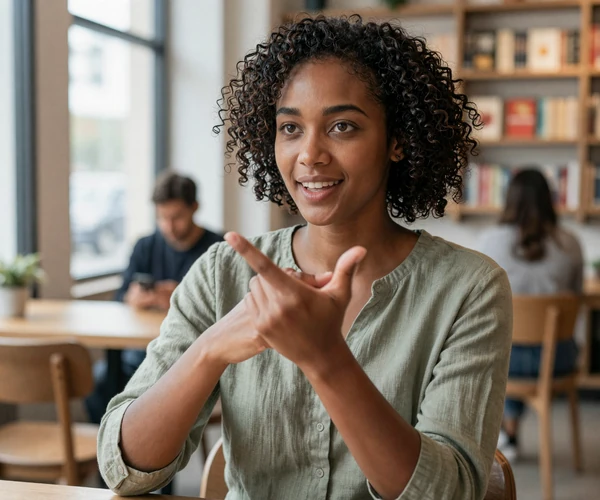
Communication Styles for Deaf and Hard of Hearing Singles
There is no single "Deaf way" to communicate. Understanding these styles helps you connect with empathy and clarity.
American Sign Language (ASL)
The primary language of the Deaf community in the U.S. ASL has its own grammar and syntax - it is a complete, natural language. Many Deaf people prefer ASL as their first and most comfortable mode of expression. Learning even basic signs shows genuine respect.
Communication tipsLip Reading (Speechreading)
Some deaf and hard of hearing people read lip movements to understand spoken language. However, only about 30-45% of English sounds are visible on the lips, making it mentally exhausting. Good lighting and face visibility are essential - avoid dim restaurants and loud bars.
Accessible date spotsText-Based Communication
Texting, messaging apps, and typed chat are the great equalizers. Many deaf singles prefer text as the primary communication channel for dating - it removes guesswork and puts both partners on equal footing. Our platform prioritizes text-first interactions.
How it worksCaptioned Video Calls
Video calls with real-time captions or an ASL interpreter bridge the gap between Deaf and hearing partners. Apps like Ava and Google Meet offer live captioning. MyDatingLove supports captioned video for accessible face-to-face connection.
Tech for datingPractical Tips for Deaf Dating Success
Advice from the Deaf community - direct, honest, and built on lived experience.
1. Specify Your Communication Preferences Early
Your profile is the right place to state how you prefer to communicate - ASL, lip reading, text, or a combination. This eliminates awkward first-message guesswork. On MyDatingLove, optional communication fields let you set these preferences so matches know before they reach out. Being explicit about your needs is not demanding - it is efficient.
2. Start Conversations with Specifics
Skip generic openers. Reference a shared hobby, a book they mentioned, or their communication preference. "I saw you love hiking and prefer ASL - I'm learning and would love a patient teacher" is infinitely better than "Hey." Specificity signals genuine interest and helps Deaf singles filter out low-effort matches.
3. Choose Accessible Venues for First Dates
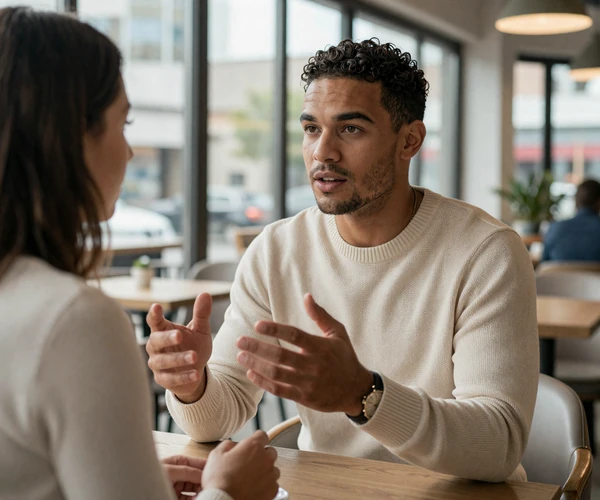
Good lighting is non-negotiable for lip readers. Quiet environments matter for those with residual hearing or hearing aids. Avoid crowded bars, live music venues, or restaurants with heavy background noise. Coffee shops with natural light, outdoor patios, museum galleries, or well-lit restaurants with booth seating work well. Planning accessibility is not overthinking - it is thoughtful dating.
4. Use Accessible Technology
Live captioning apps like Ava, Google Live Transcribe, and Otter.ai turn spoken words into text in real time - useful for dates with hearing partners. Video call platforms with built-in captions (Google Meet, Microsoft Teams) make virtual dates accessible. If your date knows some ASL, a video call lets you sign naturally. Technology does not replace human connection - it enables it.
5. Be Patient and Curious - Learn a Few Signs
If you are hearing and dating a Deaf person, learning basic ASL phrases shows respect for their culture. You do not need fluency - "hello," "thank you," "beautiful," and "I like you" go a long way. Ask your date to teach you. Most Deaf people appreciate the effort far more than the accuracy. For more dating advice across disability communities, visit our inclusive dating advice guide.
6. Watch for Red Flags
Be wary of partners who fetishize deafness, treat ASL as "cute" rather than a real language, or constantly position themselves as a "savior." These are signs of ableism disguised as affection. Equally, hearing partners who refuse to learn basic accommodation - speaking while facing away, covering their mouth, or insisting on phone calls when you have asked for text - are showing you their priorities. Trust your instincts. Read our online dating safety guide for more warning signs.
The Deaf and Hard of Hearing Community in Numbers
Can Deaf and Hearing People Date Successfully?
The short answer is yes - thousands of Deaf-hearing couples build fulfilling relationships every day. The key is clear communication, patience, and mutual respect for each other's linguistic world. A hearing partner does not need to be fluent in ASL to start, but willingness to learn is essential.
Here's where it gets interesting: Deaf-hearing relationships often develop stronger communication habits than hearing-hearing couples. Why? Because nothing is assumed. Both partners must be intentional about how they share thoughts, resolve conflicts, and express affection. There is no "I thought you heard me." Every exchange is deliberate - and that deliberateness builds trust.
On MyDatingLove, both Deaf and hearing members are welcome. We also connect you with allies who understand that deafness is a culture - not a condition to fix. Whether you are looking for another Deaf person who shares your ASL fluency, a hard of hearing partner who prefers text, or a hearing ally genuinely open to your world, this platform supports all three paths. For perspectives on interabled relationships, read our article on myths about disability and relationships.
Platform Accessibility for Deaf Users
MyDatingLove is built with deaf and hard of hearing users in mind: text-first messaging, captioned video chat, visual (not audio) notifications, communication preference fields in profiles, and a design that meets WCAG 2.1 AA standards. No audio-dependent features required.
How MyDatingLove Compares for Deaf Singles
| Feature | Mainstream Apps | MyDatingLove |
|---|---|---|
| Communication preference fields | Not available | ASL, lip reading, text, captioned video |
| Text-first messaging | Audio/video prioritized | Text as default, video optional |
| Captioned video calls | Rarely supported | Built-in captioning |
| Visual notifications | Sound-dependent | Visual + vibration alerts |
| Deaf culture awareness | No community context | Deaf identity respected |
| WCAG 2.1 AA compliance | Inconsistent | Full compliance |
Voices from the Deaf Dating Community
On Tinder, every match asked 'so can you hear anything?' within five messages. Here, my first match asked about my favorite ASL poem. That difference is everything.
I'm hard of hearing and use a combination of lip reading and text. MyDatingLove let me set that up in my profile so people already knew before messaging me. No more awkward explanations.
Explore Related Communities
Many members connect across multiple categories. Browse communities with shared experiences.
Blind & Low Vision Dating
Voice profiles and audio-first connection
Autism Dating
Sensory comfort and predictability
Wheelchair Dating
Accessible venues and mobility lifestyle
Amputee Dating
Confidence, authenticity, and body image
ADHD Dating
Hyperfocus perks and practical strategies
Cerebral Palsy Dating
Motor adaptations and accessible dates
Bipolar Dating
Stability strategies and partner support
PTSD Dating
Safety pacing and veteran support
Dwarf Dating
LPA community and active lifestyles
Epilepsy Dating
Trigger awareness and partner communication
Down Syndrome Dating
Dignity, autonomy, and supported independence
Deaf Dating: Your Questions Answered
Is there a dating site specifically for deaf singles?
Yes. MyDatingLove includes a dedicated Deaf Community category within a broader inclusive dating platform covering 12 disability communities. Unlike mainstream apps, our deaf dating site supports text-first messaging, captioned video, communication preference fields (ASL, lip reading, text), and visual notifications. Registration is free, and the platform meets WCAG 2.1 AA accessibility standards. Specialized platforms like Deaf Singles Meet also exist, but MyDatingLove offers cross-community connection with 11 additional disability categories.
Do I need to know sign language to date a deaf person?
Not necessarily. Many deaf and hard of hearing people use a combination of lip reading, text messaging, and captioned video - not exclusively ASL. However, if your partner is a native ASL user, learning basic signs shows genuine respect for their culture and language. You do not need fluency to start. Ask your date what communication style they prefer and follow their lead. For more on adaptive communication in relationships, read our communication guide.
How should I communicate on a first date with a deaf or hard of hearing person?
Ask your date beforehand how they prefer to communicate - ASL, lip reading, text, or a mix. Choose a well-lit, quiet venue where face visibility is clear. Face your date directly when speaking (if they lip read), avoid covering your mouth, and speak at a natural pace without exaggerating lip movements. If using text, keep your phone accessible. Live captioning apps like Ava or Google Live Transcribe can also help bridge communication gaps in real time.
Where do deaf people usually meet and socialize?
The Deaf community has a rich social infrastructure: Deaf clubs, Deaf church services, Gallaudet University events, National Association of the Deaf (NAD) conferences, Deaf sporting events, and ASL meetup groups. However, many social spaces are not designed for deaf people, which makes online platforms a valuable starting point. Deaf dating sites like MyDatingLove remove the communication barrier that makes mainstream socializing exhausting and create a space where deafness is the norm, not the exception.
How do I flirt with a deaf person?
Flirting with a deaf person uses the same fundamentals as any flirting - eye contact, humor, genuine interest, and compliments. In ASL, facial expressions carry grammatical meaning and emotional weight, so expressive faces are naturally more engaging. If you are texting, use humor, ask thoughtful questions, and reference their interests. If you are learning ASL, signing a compliment (even imperfectly) is charming because it shows effort. The key is to flirt with the person, not the deafness. Do not treat their hearing status as a conversation topic - treat it as context.
Can deaf and hearing people have successful relationships?
Absolutely. Thousands of Deaf-hearing couples thrive. Research consistently shows that intentional communication - the kind required in Deaf-hearing relationships - actually strengthens partnerships. Both partners learn to be explicit about needs, patient with misunderstandings, and creative with expression. The key ingredients are willingness to learn (even basic ASL), respect for Deaf culture, and never treating deafness as a problem to solve. For more on interabled relationships, see our article on myths about disability and relationships.