
Communication in relationships is the foundation everything else rests on - trust, intimacy, conflict resolution, and joy. But most relationship advice assumes both partners hear, speak, and process information the same way. When one or both partners live with a disability, communication isn't just about "talking more." It's about understanding how each person sends and receives information, and building habits that honor those differences instead of fighting them.
According to the National Communication Association, 65% of relationship breakdowns cite communication failures as the primary cause. For couples navigating disability - whether physical, sensory, or neurodivergent - the stakes are even higher because mainstream advice rarely addresses their reality. This guide offers concrete strategies for how to communicate better in a relationship when disability shapes how you connect.
Key Takeaways
- Communication style isn't one-size-fits-all - ASL, text, voice, and captioned video are all equally valid.
- Neurodivergent partners may process emotions differently, not less deeply.
- Active listening adapts to your partner's modality - watching hands matters as much as hearing words.
- Person-first and identity-first language both have their place. Ask, don't assume.
- The best communication habit is checking in regularly, not waiting for conflict.
Understanding Different Communication Styles: ASL, Text, Voice, and More
Effective communication in relationships starts with recognizing that people don't all use the same tools to express themselves. A hearing partner and a Deaf partner aren't miscommunicating because one is "bad at talking" - they're using different languages. The same principle applies when one partner relies on text due to speech differences, or when a blind partner prefers voice notes over typed messages.
American Sign Language (ASL) and Visual Communication
For the Deaf community, ASL isn't a workaround - it's a primary language with its own grammar, idioms, and cultural context. Approximately 500,000 people in the U.S. use ASL as their primary language (Gallaudet University, 2023). If your partner is Deaf or hard of hearing, learning even basic ASL signals respect for their identity, not just their accessibility needs.
Practical steps for hearing partners:
- Learn foundational signs - "I love you," "How was your day?," "Are you okay?" go further than you'd expect.
- Face your partner when speaking - many Deaf individuals lip-read to supplement context, even when signing.
- Use captioned video calls - platforms with live captions bridge gaps when ASL fluency is developing.
- Don't speak for your partner - in social settings, resist the urge to interpret unless asked.
Explore more about Deaf culture and dating dynamics in our Deaf community dating guide.
Text-Based Communication
Text is the default mode for many disabled daters - and for good reason. It gives people with speech differences, social anxiety, and auditory processing challenges time to compose their thoughts without pressure. A 2025 study by the Journal of Social and Personal Relationships found that couples who regularly use text alongside in-person conversation report 18% higher satisfaction scores, partly because text creates a written record of agreements and feelings.
Why does this matter? Text removes the "I thought you said..." problem entirely. Partners with ADHD, who often struggle with working memory, benefit especially from having important conversations documented in chat form.
Voice and Audio Messages
For blind or low-vision partners, voice communication often carries nuances that text cannot. Tone, pacing, and emphasis convey emotional context that a flat sentence on screen might miss. Voice notes also work well for partners with motor disabilities who find typing physically demanding.
The goal isn't to find the "best" communication style. It's to find the combination that lets both partners feel heard, understood, and respected. - Adapted from National Communication Association guidelines
Emotional Regulation in Neurodivergent Relationships
Emotional regulation is the ability to manage and respond to emotional experiences in a way that feels proportionate to the situation. For neurodivergent individuals - particularly those with autism, ADHD, or bipolar disorder - emotional regulation works differently, not deficiently. Research from the Journal of Autism and Developmental Disorders (2024) shows that autistic adults often experience emotions with greater intensity than neurotypical peers, even when outward expression appears muted.
Here's where it gets interesting: the disconnect isn't in feeling - it's in expression. An autistic partner may feel deeply moved by a gesture but struggle to show it in a way their neurotypical partner recognizes. An ADHD partner might shift from frustration to affection in minutes, which can feel disorienting to someone who processes emotions more gradually.
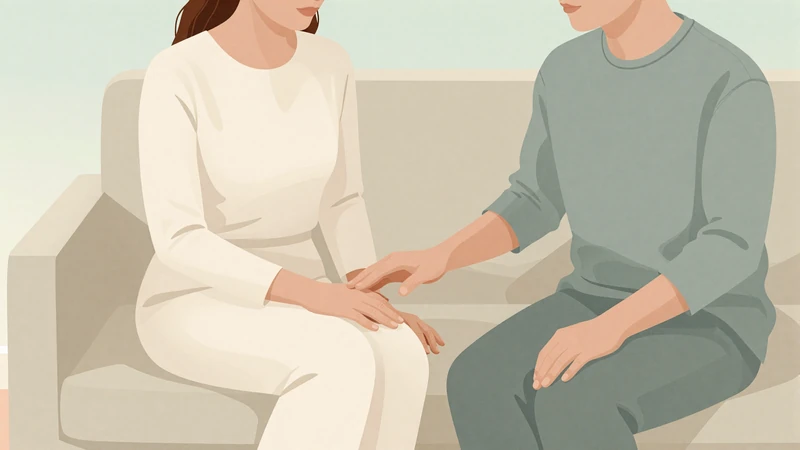
Strategies for Navigating Emotional Differences
- Name your emotions explicitly: "I'm feeling overwhelmed right now, not angry at you" removes guesswork. This is especially helpful for partners with autism, where reading nonverbal cues is harder.
- Agree on a pause signal: When emotions escalate, a pre-agreed word or gesture ("I need ten minutes") prevents meltdowns from becoming arguments.
- Validate before problem-solving: Neurodivergent partners often need acknowledgment ("That sounds really frustrating") before solutions. Jumping to fixes can feel dismissive.
- Separate behavior from intent: If your ADHD partner forgets a plan, it's executive dysfunction - not a sign they don't care.
A Note on Rejection Sensitive Dysphoria (RSD)
Up to 99% of adults with ADHD experience RSD - an intense emotional response to perceived rejection or criticism. In relationships, this means a neutral comment like "You forgot the milk" can trigger a disproportionate pain response. Understanding RSD transforms how you frame requests: "Could you grab milk next time?" lands very differently than "You always forget things."
Active Listening When Communication Looks Different
Active listening is the single most cited skill in relationship therapy - but traditional definitions assume both partners can hear, maintain eye contact, and respond verbally in real time. When disability changes one or more of those variables, active listening needs to be redefined, not abandoned.
What does this mean in practice? Here are six strategies adapted for diverse communication styles:
- Mirror the modality: If your partner signs, respond in sign (even imperfectly). If they text, respond in text. Switching modalities mid-conversation signals disengagement.
- Confirm understanding, don't assume it: Paraphrase what you heard - "So you're saying you felt left out at dinner?" - especially when processing differences exist.
- Watch hands, not just faces: For ASL users, active listening means active watching. Nodding while looking away is the equivalent of saying "uh-huh" while scrolling your phone.
- Allow processing time: Some autistic individuals need 10-30 seconds longer to formulate responses. Silence isn't discomfort - it's thought in progress.
- Use written summaries after big conversations: A follow-up text like "Here's what I heard us agree on..." helps partners with memory or auditory processing challenges.
- Ask about preferences regularly: "Is this a good time to talk about something important?" respects energy levels that fluctuate with chronic pain, fatigue, or mood cycles.
Communication Activities for Couples
Structured activities reduce the pressure of open-ended "we need to talk" conversations. The table below matches communication activities for couples to specific needs:
| Activity | Best For | How It Works |
|---|---|---|
| Daily check-in (5 min) | All couples, especially ADHD | Each partner shares one high and one low from the day - brief, structured, consistent |
| Written letter exchange | Deaf couples, speech differences | Write a letter about something you appreciate; read or sign it together weekly |
| Emotion cards | Autism, alexithymia | Use printed cards with emotion words and faces to identify how you feel when words fail |
| Scheduled "state of us" talk | Bipolar, PTSD | Monthly sit-down (during stable periods) to discuss needs, boundaries, and plans |
| Parallel activity + chat | Social anxiety, sensory sensitivity | Cook, walk, or do a puzzle together - conversation flows more naturally during shared tasks |
For more structured approaches to dating with neurodivergent brains, our neurodivergent dating guide covers executive dysfunction, masking, and sensory planning in detail.
Person-First vs Identity-First Language: Why Words Matter
The language you use about disability shapes how your partner feels seen. Person-first language ("person with a disability") emphasizes the individual before the condition. Identity-first language ("disabled person," "Deaf individual") treats disability as an integral part of identity - not something to separate from the person.
Neither is universally correct. The right choice depends on your partner's preference, and the only way to know is to ask.
| Use This | Instead of This | Why |
|---|---|---|
| Wheelchair user | Wheelchair-bound | "Bound" implies restriction; a wheelchair provides freedom |
| Person with epilepsy | Epileptic | Reduces a person to a single condition |
| Deaf (capital D) | Hearing impaired | Deaf community views deafness as cultural identity, not impairment |
| Little person / person of short stature | Midget | Considered a slur by the dwarfism community |
| Lives with bipolar disorder | Suffers from bipolar | "Suffers" frames disability as only tragic |
| Nondisabled / neurotypical | Normal | "Normal" implies disability is abnormal |
The bottom line: ask your partner what language they prefer, then use it consistently. If you slip, correct yourself briefly and move on - over-apologizing shifts the focus back to you. For a deeper exploration of harmful language patterns, read our article on myths about disability and relationships.
Strong communication in relationships isn't about eliminating misunderstandings - it's about building the habits that help you navigate them together. When disability shapes how one or both partners express and receive information, the couples who thrive are the ones who treat communication style as a design problem, not a deficit. Learn the tools, respect the differences, and check in often. That's how connection grows.