
Blind and Visually Impaired Dating: Connection Beyond Sight
Most dating apps are built around photos. Yours is built around voice, personality, and genuine conversation. On a blind dating app designed for you, attraction starts with what you hear - not what you see.
Page Summary
What You'll Find on This Page
- Why voice-first dating outperforms photo-based swiping for blind and low vision singles
- Profile alternatives - voice bios, detailed text profiles, and screen-reader optimized layouts
- Safety strategies specifically designed for visually impaired online daters
- Accessible date ideas that prioritize non-visual experiences - from live music to nature walks
- FAQ covering disclosure, monocular vision, and building trust when you cannot see a profile photo
Beyond Photos: A Voice-First Approach to Online Dating
The best blind dating app is one that does not treat photos as the price of admission. Mainstream platforms like Tinder and Bumble are built on a swipe model - a visual-first architecture that excludes approximately 12 million Americans who are blind or have significant vision loss (National Federation of the Blind, 2024). When attraction is reduced to a 400-pixel thumbnail, an entire community gets filtered out before the conversation starts.
MyDatingLove takes the opposite approach. Voice introductions let you present yourself through tone, humor, and warmth - qualities that a photo can never capture. Research from the University of British Columbia found that vocal attractiveness predicts romantic interest more reliably than physical appearance in initial interactions. Your voice carries personality. A photo carries pixels.
Here's the thing: this is not just an accessibility feature. It is a better model for everyone. When you remove photo dependency, you build connections based on who people actually are - their stories, their humor, their values. Blind people dating on MyDatingLove are not working around a limitation. They are using a system designed for deeper, faster emotional connection.
Voice messaging also eliminates the fatigue that comes with prolonged typing on screen readers. Instead of dictating a message, waiting for text-to-speech confirmation, and correcting autocorrect errors, you simply speak. Natural, fluid, real. Learn more about communication styles that strengthen relationships.
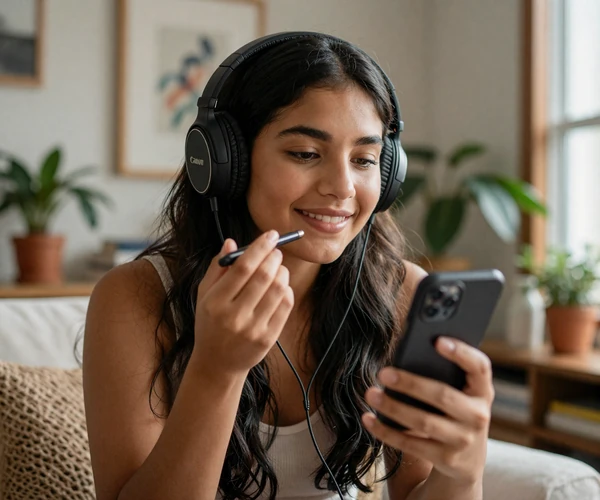
Vision Loss and Dating: The Numbers
Profile Alternatives for Blind and Low Vision Users
Your profile should work for you - not against you. Here are three ways MyDatingLove replaces the photo-first model with something that actually captures who you are.
Voice Bio Recordings
Record a 60-second voice introduction that other members can play before deciding to connect. Your tone, your laugh, your storytelling - all communicated instantly. Voice bios convey warmth and authenticity in ways that a 150-character text bio never could.
How profiles workDetailed Text Profiles
Expanded profile fields let you describe your interests, values, communication style, and what you are looking for - in your own words. No character limits that force you to choose between listing hobbies and sharing personality. Screen readers parse these fields naturally.
Profile writing tipsScreen-Reader Optimized Layout
Every element on MyDatingLove is labeled for assistive technology. Profile cards announce names, ages, and bios in a logical reading order - no guessing which button does what. Compliant with WCAG 2.1 AA, tested with JAWS, NVDA, and VoiceOver.
Accessibility featuresSafety Tips for Visually Impaired Online Daters
Safety is not optional - it is the foundation of every good dating experience. For blind people dating online, specific strategies reduce risk and increase confidence. These are not hypothetical precautions; they are practices used daily by visually impaired daters worldwide.
Choose Familiar Locations
Meet at venues you already know - cafes, restaurants, or parks where you have practiced the route. Familiarity with the layout, staff, and exits means you can focus on your date instead of navigation. If the location is new, do a practice visit beforehand or ask a friend to describe the space.
Use Verified Profiles
Request profile verification before meeting in person. MyDatingLove offers identity verification that confirms the person behind the profile is real. When you cannot visually confirm someone's appearance, verification provides a critical layer of trust. According to a 2024 FTC report, romance scam losses exceeded $1.3 billion annually - verification is not paranoia, it is standard practice.
Establish Clear Arrival and Departure Plans
Tell a trusted person where you are going, who you are meeting, and your expected return time. Arrange your own transportation - rideshare apps with accessibility features (Uber's VoiceOver integration, Lyft's screen-reader support) give you independent control over when you leave.
Video or Voice Call Before Meeting
A 10-minute voice call reveals more than 50 text messages. Listen for consistency between their profile bio and their conversation. Trust your instincts about tone and sincerity - your auditory perception is a powerful assessment tool.
Trust Your Non-Visual Instincts
Blind and low vision individuals often develop heightened awareness of vocal cues, body language patterns, and environmental shifts. If something feels off - a change in tone, evasive answers, pressure to meet at their home - trust that feeling. Choosing what works for you is not a weakness; it is good judgment.
Need More Safety Resources?
Visit our Safety & Privacy page for platform-wide security features, anti-harassment policies, and crisis resources including the 988 Suicide & Crisis Lifeline.
Accessible Date Ideas for Blind and Low Vision Singles
The best dates for visually impaired singles prioritize shared experience over shared scenery. These seven ideas work whether you have no vision, low vision, or monocular vision - and every single one creates space for genuine conversation.
| Date Idea | Why It Works | Accessibility Notes |
|---|---|---|
| Live music or jazz club | Shared auditory experience creates emotional bonding | Choose venues with accessible seating; call ahead for layout |
| Cooking class together | Hands-on, multi-sensory, collaborative | Notify instructor in advance; many kitchens offer adapted tools |
| Botanical garden or nature trail | Texture, scent, sound - nature engages every sense | Choose paved or well-maintained paths; bring a guide if needed |
| Audio-described theater | Professional audio description makes performances fully accessible | Book audio-described performances in advance; many theaters offer free headsets |
| Coffee shop with live acoustic music | Low-key atmosphere with background music fills silences naturally | Choose familiar cafes with consistent layout; avoid noisy chains |
| Pottery or tactile art class | Hands-on creative expression, no visual pressure | Many studios welcome visually impaired participants; call first |
| Podcast or audiobook listening date | Share headphones and discuss - intimate and accessible | Works anywhere; perfect for rainy days or low-energy moments |
What does this mean in practice? The common thread is multi-sensory engagement. When you remove the expectation that dates need to be visually impressive - scenic views, Instagram-worthy restaurants - you open up a world of experiences that are richer, more intimate, and more memorable. For more ideas, read our real stories and accessible date planning guides.
Monocular Vision, Low Vision, and the Disclosure Question
Not all visual impairment is total blindness. Monocular vision - sight in only one eye - affects depth perception, peripheral awareness, and spatial judgment but is often invisible to others. Low vision covers a wide spectrum, from light perception to functional reading ability with magnification. These experiences are frequently overlooked by both mainstream dating apps and disability-specific platforms.
The disclosure question - when and how to tell a date about your vision - has no fixed answer. Some people mention it in their profile bio. Others bring it up when it becomes relevant, like explaining why they need extra time reading a menu or why they prefer sitting on a specific side. Both approaches are valid.
"I have monocular vision. Most people don't notice until I bump into something on my left side. I mention it when I'm comfortable - usually the second date. It's part of me, not the headline." - Community member, MyDatingLove
On MyDatingLove, optional accessibility fields let you share as much or as little as you choose. You control the narrative. There is no pressure to disclose before you are ready, and no expectation that your vision defines your profile. For strategies on disclosure timing across all disability types, explore our confidence and self-acceptance guide.
Voices from the Blind and Low Vision Community
On Bumble, my screen reader read profile photos as 'image, image, image.' Useless. Here, I listened to someone's voice bio and knew within 30 seconds that she was funny, warm, and someone I wanted to talk to. We've been dating for four months.
I lost my sight at 22 from a retinal condition. Dating apps made me feel invisible - ironic, right? MyDatingLove's voice messaging let me be myself. My partner says she fell for my laugh before anything else. That would never have happened on Tinder.
Explore Related Communities
Many members connect across multiple categories. Visual impairment often intersects with other conditions and communities.
Wheelchair Dating
Accessible venues and mobility lifestyle
Deaf Community
ASL culture and communication styles
Autism Dating
Sensory comfort and predictable communication
Cerebral Palsy Dating
Motor adaptations and accessible dates
Amputee Dating
Confidence, authenticity, and body image
ADHD Dating
Neuroscience-backed dating strategies
Bipolar Dating
Stability strategies and partner support
Dwarf Dating
LPA community and active lifestyles
Epilepsy Dating
Trigger awareness and partner communication
PTSD Dating
Safety pacing and trauma-informed connection
Down Syndrome Dating
Dignity, autonomy, and supported independence
Blind Dating: Your Questions Answered
Is online dating harder for blind people?
It is harder on platforms that rely on photos and swipe mechanics. When a dating app reduces attraction to a visual thumbnail, anyone who cannot see - or be seen in the way the platform expects - faces a structural disadvantage. But on communication-first platforms like MyDatingLove, blind people dating often report deeper, faster connections. The barrier is not blindness; it is bad design. Our accessibility in dating guide breaks down the specific barriers and solutions.
Do I need to share a photo on MyDatingLove?
No. Photos are optional, never required. You can use a voice bio, a detailed text profile, or both. Many blind and low vision members prefer voice introductions because they communicate personality more effectively than any image. If you choose to share a photo, you can also add an audio description of yourself for other visually impaired members.
When should I tell my date about my visual impairment?
There is no fixed rule. Some members mention it in their profile. Others bring it up when it naturally becomes relevant - like explaining why they navigate a restaurant differently or prefer a specific seat. The timing is entirely your choice. MyDatingLove offers optional accessibility fields that let you disclose at your comfort level, without pressure. For more strategies, visit our inclusive dating advice.
Should I mention monocular vision on my profile?
If monocular vision affects your comfort or safety during dates - for example, depth perception challenges or peripheral vision gaps - sharing it can help your date understand your needs without awkwardness. But it is not mandatory. Many people with vision in one eye choose to mention it when it becomes relevant, such as explaining why they prefer sitting on a certain side. The decision is always yours.
How do I stay safe when I cannot see my date?
Build trust incrementally: start with voice calls, then video calls (even if you cannot see them, they can see your environment), then meet at familiar public locations. Use profile verification features, share your plans with a trusted person, and arrange independent transportation. Trusting your instincts is part of dating, not a weakness. For comprehensive safety protocols, visit our Safety & Privacy page.
Can blind people have successful long-term relationships?
Absolutely. Successful relationships are built on communication, shared values, mutual respect, and trust - none of which require sight. Couples where one or both partners are blind or visually impaired report the same relationship satisfaction rates as sighted couples when communication quality is high (Journal of Visual Impairment & Blindness, 2023). Read stories from real couples on our success stories page.