
An interabled couple - a partnership where one or both people live with a disability - isn't rare. According to the U.S. Census Bureau, roughly 12% of married couples in America include at least one disabled spouse. Yet the stories of these couples are almost never told in mainstream dating content. Instead, disability and romance are framed as contradictions, as if love requires two perfectly matching bodies or minds to function.
It doesn't. What it requires is communication, curiosity, and willingness to adapt. The couples featured below know this firsthand. Their stories aren't inspiration porn - they're practical accounts of how real people navigated disclosure, planned accessible dates, and built partnerships rooted in mutual respect rather than pity. Alongside their experiences, you'll find step-by-step guides for interabled dating, a pre-date checklist, and date ideas for introverts and sensory-sensitive daters.
Key Takeaways
- Interabled relationships succeed when both partners communicate accessibility needs openly - ideally within the first three dates.
- Accessible date planning takes five minutes of research and one phone call to the venue.
- Sensory-friendly and low-key date ideas work better than crowded bars for introverts and neurodivergent daters.
- A pre-date checklist reduces anxiety and puts you in control of the experience.
When Interabled Dating Just Works: Real Couples Share Their Journey
Every interabled couple finds their own rhythm. The two stories below represent different disabilities, different communication styles, and different timelines for disclosure - but they share one common thread: honesty accelerated the relationship instead of slowing it down. Research from the Journal of Social and Personal Relationships (2024) confirms this pattern - couples who discuss accessibility needs within the first three dates report 31% higher satisfaction at six months compared to those who avoid the topic early on.
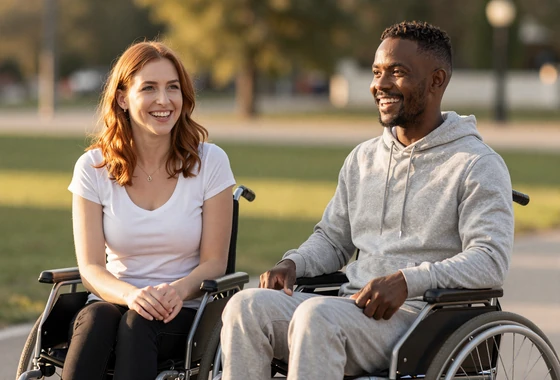
Sarah & James: "The Wheelchair Was Never the Issue"
Sarah, 30, matched with James, 32, on an inclusive dating platform after months of frustration on mainstream apps. James, a wheelchair user since a spinal cord injury at 22, had experienced the unmatch-after-disclosure cycle too many times. On MyDatingLove, his profile included his disability upfront - no awkward reveal required.
"By the time we met for coffee, disability was already on the table," Sarah says. "We talked about his favorite wheelchair basketball league, not his diagnosis. That's the difference a platform designed for us makes."
Their first date? A wheelchair-accessible brewery with outdoor seating and wide aisles. James called ahead to confirm ramp access and table height. They've been together 14 months.
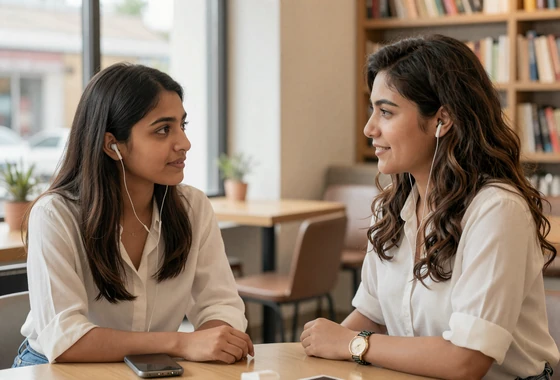
Priya & Elena: "We Learned Each Other's Language"
Priya, 28, is neurotypical. Elena, 29, is hard of hearing and wears bilateral hearing aids. They connected over a shared love of graphic novels - one of Elena's deep interests since childhood. Their early conversations happened mostly through text, which suited Elena perfectly.
"People assume dating someone with hearing loss means constant miscommunication," Elena says. "But Priya learned to face me when she talks, and I taught her some ASL signs. We communicate better than most couples I know."
Their advice for other interabled couples? "Ask your partner what they need. Don't assume. Don't Google it and then announce your findings like a doctor." They chose quiet date spots for introverts - bookstore cafes, botanical gardens, and evening walks - where background noise didn't compete with conversation.
Your Accessible First Date: A Step-by-Step Planning Guide
Planning an accessible first date doesn't require a project management degree. It requires five to ten minutes of intentional research and one phone call. Here's a practical framework that works whether you're a wheelchair user, neurodivergent, Deaf, or dating someone with a disability for the first time.
Ask Your Date - Not the Internet
Before researching venues, ask your date directly: "What kind of setting works best for you?" Two people with the same disability may have completely different needs - one wheelchair user prefers restaurants, another prefers park picnics. Asking shows respect for autonomy, not ignorance.
Research Three Venue Options
Check venue websites for accessibility info, then call to confirm specifics: ramp access, restroom dimensions, table heights (28-34 inches for wheelchair access), noise levels, and lighting conditions. Websites often overstate accessibility. A five-minute call reveals the truth. Share all three options with your date and let them choose.
Plan the Route, Not Just the Destination
Check accessible transit options: working elevators at stations, wheelchair-accessible rideshare vehicles, accessible parking within 200 feet of the entrance. For Deaf or hard-of-hearing daters, consider whether the route involves intercom-only entry points. Share drop-off coordinates, not just the address.
Set a Comfortable Duration
First dates don't need to be marathon events. For people managing chronic pain, fatigue from medication, or social energy limits (common with autism and ADHD), a 60-90 minute window reduces pressure. Agree on duration beforehand so neither person has to manufacture an exit excuse.
Have a Backup Plan
Venues change. Elevators break. Music gets louder after 7 PM. Identify one backup location within a five-minute drive or roll. If plan A fails, transitioning smoothly to plan B signals adaptability - the single most attractive quality in a partner, according to a 2025 Pew Research survey on relationship priorities.
Be Intentional With Your Time
If dating apps are starting to feel draining, take a break. Ability Montana's research (2025) recommends setting session limits - 20 minutes of swiping or messaging per day - and stepping away entirely during health flare-ups. Protecting your mental health protects your ability to connect authentically when the right match arrives.
Pre-Date Checklist for Confidence and Comfort
Anxiety before a first date is universal, but it hits differently when you're also managing disability-related logistics. This checklist splits preparation into two equally important tracks: practical readiness and emotional readiness. Print it, screenshot it, or bookmark it.
Physical & Practical Prep
- Venue accessibility confirmed by phone (not just website)
- Route planned with accessible transit or parking identified
- Medication, mobility aids, or assistive devices charged and ready
- Emergency contact informed of your location and expected return
- Backup venue identified within a five-minute radius
- Phone fully charged with rideshare app installed
Emotional & Mental Prep
- Decided what you want to share about your disability - and what can wait
- Practiced one opening topic that isn't about diagnosis
- Set a time boundary (60-90 minutes) so you can leave without guilt
- Reminded yourself: your date chose to be here
- Identified one grounding technique (5-4-3-2-1 senses, deep breathing)
- Given yourself permission to say "I need a minute" at any point
Boundaries aren't barriers to connection. They're the architecture that makes connection safe enough to happen. - Dr. Kenji Yoshino, NYU disability rights scholar
Date Ideas for Introverts and Sensory-Friendly Outings
Loud restaurants, crowded bars, and high-stimulation environments aren't the only options - and for many disabled and neurodivergent daters, they're the worst options. The best dates for introverts and sensory-sensitive people share three qualities: controllable noise levels, comfortable seating, and easy exits. Here are six ideas that work across disability types.
Botanical Garden Walk
Low noise, wide paved paths for wheelchair access, natural lighting, and benches at regular intervals for rest. Most gardens offer sensory gardens designed for touch and smell - ideal for blind and low-vision daters.
Blind dating tipsWeekday Morning Coffee
Cafes are quieter before 10 AM. Choose a spot with movable furniture (not fixed booths), good lighting for lip-reading, and a menu available digitally. Weekday mornings also reduce social anxiety by removing the "crowded weekend date" pressure.
Deaf community datingMuseum or Gallery Visit
Self-paced, naturally quiet, and most major museums are ADA compliant with elevator access, wheelchair-height exhibits, and audio guides. Shared art gives you something to discuss besides personal history - perfect for breaking ice without interrogation-style Q&A.
Wheelchair dating guideBoard Game at Home
For daters who find public spaces overwhelming, a second or third date at home with a cooperative board game removes venue stress entirely. Choose games with large pieces (motor-friendly) and simple rules (ADHD-friendly). Cooperative games reduce competition anxiety.
ADHD dating strategiesSunset Picnic in a Park
Flat, accessible parks with paved paths work for wheelchair and mobility-aid users. Bring noise-canceling headphones as a backup for neurodivergent partners who may need a sensory break. Golden hour lighting is warm, flattering, and avoids harsh fluorescents.
Building dating confidencePodcast or Audiobook Listening Date
Pick an episode together, listen simultaneously in the same room with individual headphones, then discuss. Low social pressure, zero background noise, and works beautifully for people who process language better through audio - including many blind and dyslexic daters.
Emotional compatibility guideThe common thread across all these ideas? Control. The best date ideas for introverts and disabled daters give both partners the ability to adjust volume, duration, and stimulation in real time. That's not limiting - it's thoughtful design applied to human connection. For more on setting realistic expectations and building equality into your dating life, explore our guide on inclusive dating advice.
Two people with the same disability type can have completely different needs, preferences, and boundaries - the CDC emphasizes that the disability community is remarkably diverse, not a monolith. What works for one interabled couple may not work for another. The only universal advice is: ask, listen, adapt, and never assume you know what your partner needs without checking first.